

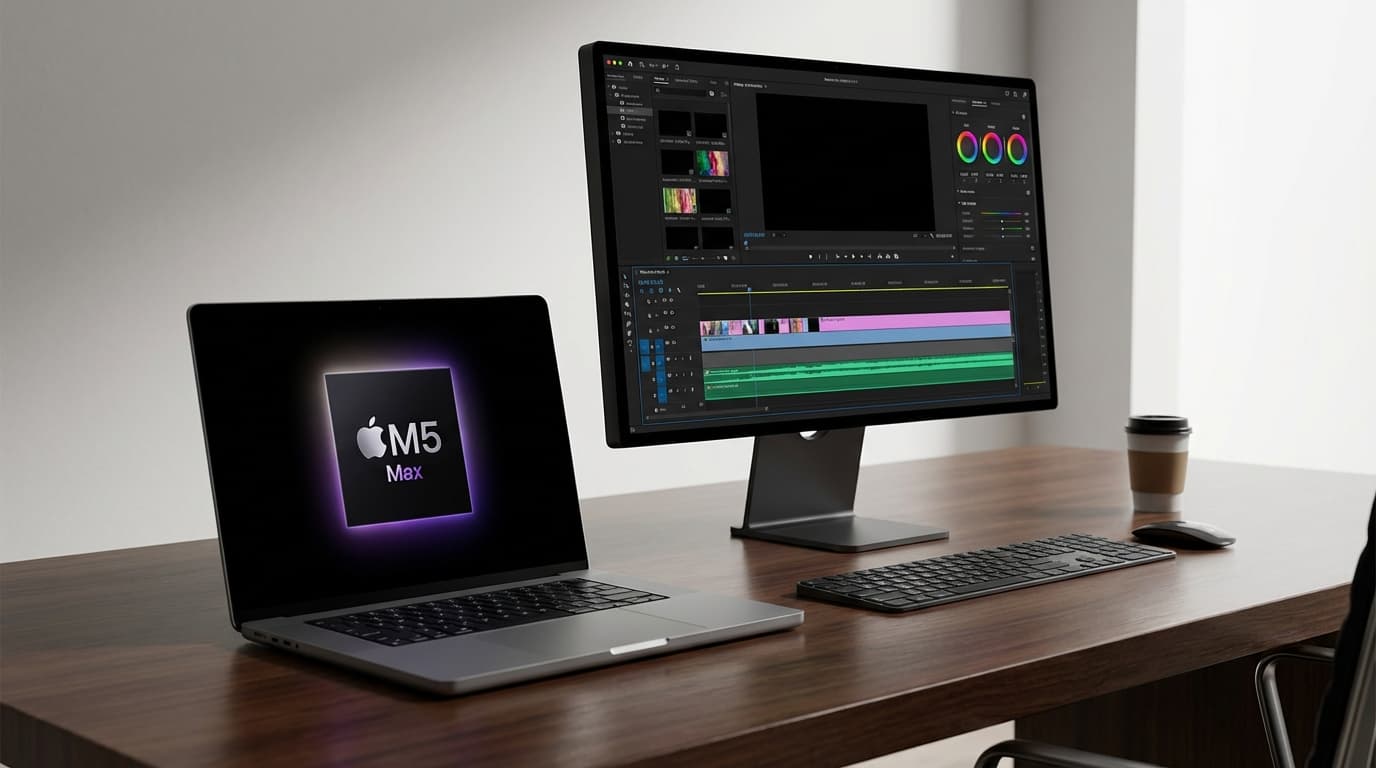
M5 Max: A Tangible Leap in Processing Power
Apple’s 2026 hardware lineup has finally hit the test benches, and the star of the show is undeniably the M5 Max chip housed within the new 16-inch MacBook Pro. According to rigorous benchmarks from Ars Technica, the M5 Max is far more than a simple incremental update. The chip features a completely redesigned set of "Performance" cores that, in real-world testing, have debunked early rumors suggesting they were merely rebranded energy-efficient cores. For professionals managing 8K video rendering, neural network training, or complex 3D simulations, the M5 Max represents a substantial and functional upgrade.
Reviewers at The Verge pointed out that while the gap between the M4 and M5 might seem subtle for basic productivity, the M5 Max truly shines under extreme workloads. For users still relying on M1 or M2 architecture, the jump to M5 Max is described as "transformative." Data shows a nearly 25% increase in multi-core performance compared to the previous generation, justifying the steep $6,149 price tag for the top-spec model. This release solidifies Apple's dominance in the high-end workstation market, where sustained thermal performance and raw compute power are paramount.
Visual Excellence: Studio Display XDR and the 5K Standard
Complementing the powerful new MacBooks is a refreshed display lineup, headlined by the Studio Display XDR. Positioned to bridge the gap between the standard Studio Display and the ultra-premium Pro Display XDR, this new unit targets the vast middle-ground of professional creatives. As detailed by Ars Technica, the 27-inch 5K (5120 x 2880) panel offers improved contrast ratios and color accuracy, making it an ideal companion for high-end photography and graphic design workflows.
However, Apple’s premium pricing remains a point of contention. The Verge’s review, titled "Pro at a Premium," highlights that while the integration with macOS is unparalleled, the display faces stiff competition from third-party Mini-LED monitors offering higher refresh rates or 8K resolution. Nevertheless, for those deeply embedded in the Apple ecosystem, the Studio Display XDR provides a level of visual consistency and ease-of-use that is hard to find elsewhere. It represents Apple's ongoing commitment to professional-grade peripherals that match the power of its silicon.
Delays in the Home Ecosystem: The Missing Link
While the Mac side of the business is firing on all cylinders, Apple’s smart home ambitions appear to have hit a speed bump. Rumors of a long-awaited smart home display—frequently referred to as the "HomePod with a screen" or "HomePad"—now suggest a launch delay until fall 2026. According to Bloomberg’s Mark Gurman and prominent leaker Kosutami, the project has been pushed back to coincide with the release of iOS 27, as Apple works to refine the software experience for a dedicated home-hub device.
This delay leaves a significant gap in Apple's product strategy as competitors like Amazon and Google continue to dominate the smart display market. The postponement suggests that Apple is prioritizing a seamless software-hardware integration rather than rushing an unfinished product to market. For consumers, this means the wait for a truly integrated, screen-based Apple home controller continues, shifting the spotlight back to the company’s core computing products for the first half of 2026.
Market Strategy: Driving Upgrades Through Superiority
Taken as a whole, Apple’s 2026 strategy appears focused on driving upgrades through technical superiority rather than aesthetic changes. By maintaining identical designs for the MacBook Pro while packing them with the industry-leading M5 Max, Apple is betting that performance alone can convince power users to open their wallets. With the M5 MacBook Air starting at $1,099, the company is also ensuring that its latest silicon reaches a broader consumer base, maintaining a healthy mix of volume and high-margin sales.
Industry data indicates that while overall upgrade cycles are lengthening, the performance gulf between the M1 and M5 is now wide enough to trigger a major replacement wave. As the first M5-equipped devices begin shipping, the focus will soon shift toward the software capabilities of iOS 27 and the eventual arrival of the smart home hub later this year. For now, the M5 Max stands as a testament to the ongoing success of Apple Silicon, pushing the boundaries of what is possible in a portable workstation.