
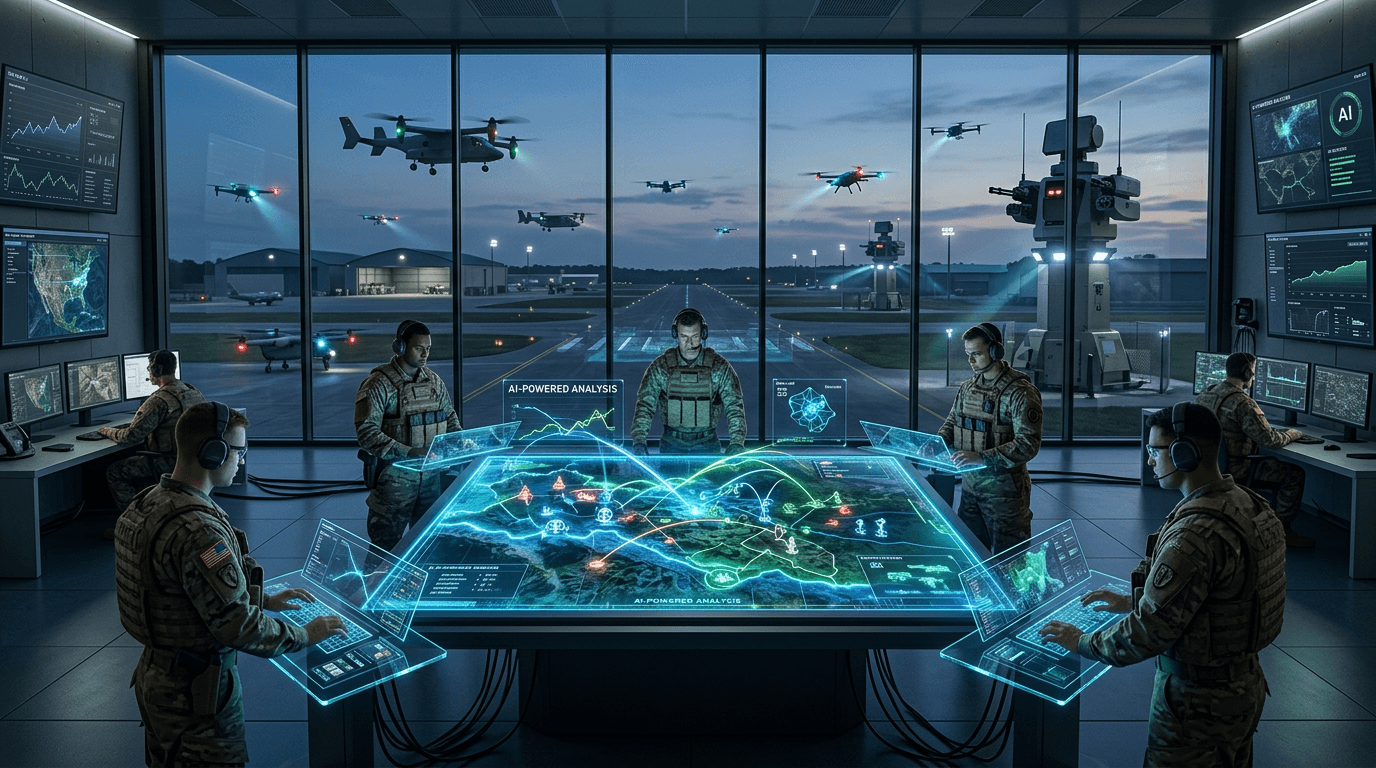
A New Era of Defense Procurement: Anduril’s Landmark Victory
In a move that has sent shockwaves through the military-industrial complex, the U.S. Army has announced a massive contract with defense tech startup Anduril Industries, valued at up to $20 billion. This agreement is not just the largest in the company's history; it represents a fundamental shift in how the Pentagon procures technology. For the first time, the Army has consolidated over 120 separate procurement actions into a single "enterprise contract," signaling a preference for integrated software platforms over fragmented hardware solutions.
According to reports from TechCrunch, the $20 billion funding will support the development and deployment of autonomous defense systems, border surveillance technology, and counter-drone platforms. At the heart of Anduril’s offering is its proprietary "Lattice" operating system, which uses AI and sensor fusion to provide real-time situational awareness across multiple battlefronts. This victory cements Anduril’s position as a primary challenger to traditional defense giants like Lockheed Martin and Raytheon.
Consolidating 120 Actions: The Drive for Efficiency
The most distinctive feature of this contract is its scope. Traditionally, the U.S. Army had to deal with dozens of different contractors for individual components like radars, cameras, and software interfaces, often leading to compatibility issues and skyrocketing maintenance costs. By consolidating 120 procurement points into one contract with Anduril, the Army aims to drastically improve logistical efficiency and enable rapid software updates to meet evolving battlefield threats.
Fact-check results indicate that Anduril has already proven the efficacy of its low-cost autonomous systems in recent minor conflicts. Unlike traditional defense contractors who rely on government-funded research and development (R&D), Anduril employs a "Silicon Valley model"—developing products with private capital first and then selling ready-made solutions to the government. This agility was a decisive factor in securing the $20 billion commitment.
Venture Capital and Industry Disruption
Anduril’s success has ignited a new wave of interest in "Defense Tech" among venture capitalists. Data from Yahoo Finance suggests that investors are increasingly rotating capital out of pure-play SaaS and into hard tech and national security startups. Google Trends data also shows a 150% increase in search interest for "Anduril hiring" and "Defense Tech investing" following the announcement. It’s clear that both the talent pool and capital markets are shifting toward the defense sector.
Industry analysts believe this contract will force traditional defense primes to undergo a digital transformation. If these legacy giants cannot match the software and AI capabilities of startups like Anduril, they risk losing dominance over major multi-year programs. This competition is no longer just about who can build the biggest tank, but who can write the most effective AI algorithms for the battlefield command chain.
Ethical and Regulatory Challenges
Despite its technical success, Anduril’s rise has re-ignited the debate over "autonomous weapon systems." Human rights organizations and some tech leaders have expressed concerns that an over-reliance on AI for target identification could lead to catastrophic errors. While Anduril maintains that its systems always include a "human-in-the-loop," the reality of millisecond response times in modern warfare raises questions about the actual effectiveness of human oversight. These ethical concerns will likely lead to calls for new international regulations on AI in combat.
Future Outlook: The Automation of Defense
As the $20 billion is deployed over the coming years, we can expect U.S. borders and military installations to become increasingly populated by AI-driven automated sentry systems. This transition will not only reshape the organizational structure of the military but also have a profound impact on global arms trade. Anduril’s next logical step is to export its Lattice system to allied nations, potentially creating a multinational automated defense network. Founded by Palmer Luckey, Anduril is rewriting the definition of modern warfare at an unprecedented pace.