

The Birth of A2UI: Tailoring Experiences for Autonomous Agents
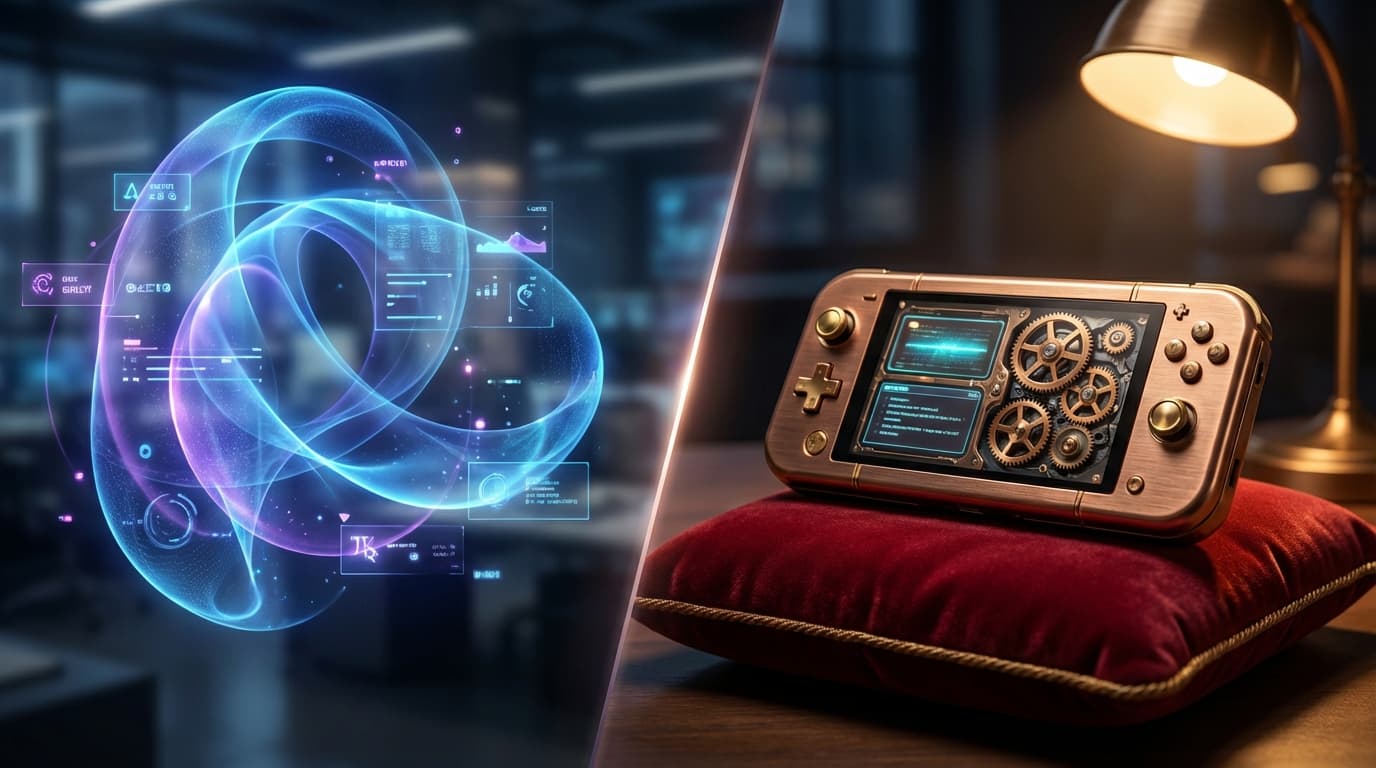
As the industry pivots from simple chatbots to autonomous 'Agentic AI,' a major bottleneck has emerged: the User Interface (UI). Traditional, static UIs are designed for human predictability, not the dynamic, often unpredictable reasoning paths of AI agents. VentureBeat (2026) highlights the emergence of the 'Agent-to-User Interface' (A2UI) model—a paradigm shift where the software interface is no longer pre-programmed but is instead generated dynamically by the agent itself based on real-time data and task requirements.
In this new model, if an AI agent encounters a complex financial discrepancy, it doesn't just send a text alert; it might 'invent' a custom data visualization or a specialized control panel to help a human supervisor intervene. By utilizing structured ontologies like FIBO (Financial Industry Business Ontology), businesses can ensure these dynamic agents stay within operational guardrails while the A2UI provides the necessary transparency and human-in-the-loop control.
Palmer Luckey’s $1B Retro Play: ModRetro Hits Unicorn Status
While software leans into the future, a corner of the hardware market is looking firmly into the past—with a billion-dollar price tag. ModRetro, the retro-gaming startup founded by Oculus creator Palmer Luckey, is reportedly seeking funding at a $1 billion valuation. According to TechCrunch (2026), the company's flagship product, the 'Chromatic'—a high-end, Game Boy-compatible handheld—has transcended the niche hobbyist market to become a symbol of luxury hardware craftsmanship.
The massive valuation for ModRetro underscores a unique market sentiment in 2026: as our lives become increasingly dominated by ephemeral AI and cloud-based services, the demand for high-quality, tactile physical experiences is surging. Luckey, known for his work in defense tech with Anduril, is applying the same rigorous engineering standards to pixel art and plastic buttons, proving that nostalgia, when executed with precision, is a formidable business asset.
The Paradox: Fluid Software and Rigid Hardware
These two developments represent a fascinating paradox in the current tech landscape. We are striving for ultimate fluidity in our software (A2UI), yet we are paying a premium for the rigidity and simplicity of the past (ModRetro). This duality reflects a deep-seated human need for both efficiency and tangibility. As AI agents begin to manage our calendars and portfolios via invisible, dynamic interfaces, we seek refuge in the predictable, physical joy of a 1990s-style handheld console.
Qualitative market analysis shows a significant crossover in the demographics interested in both "Agentic Workflows" and "High-end Retro Hardware." For the modern tech consumer, the future is about having an AI that does the work for you, leaving you more time to engage with high-quality physical hobbies. The A2UI provides the freedom; ModRetro provides the destination.
Future Outlook: When Agents Design the World
The long-term impact of the A2UI model could be the 'death of the fixed interface.' In the near future, we may stop buying software with a specific look and feel, instead using 'white-label' platforms that morph to fit our personal workflow. Meanwhile, the success of ModRetro suggests that the future of hardware lies in 'boutique engineering'—products built to last a lifetime in an age of disposable tech.
The intersection of these trends may occur in the realm of Extended Reality (XR). Imagine playing a physical ModRetro console while an AI agent projects a dynamic, agentic UI around you, offering real-time game analysis or community stats. As Palmer Luckey builds the ultimate physical artifact and software engineers build the ultimate digital shape-shifter, 2026 is becoming the year where technology finally learns to speak both the language of the future and the language of the heart.