

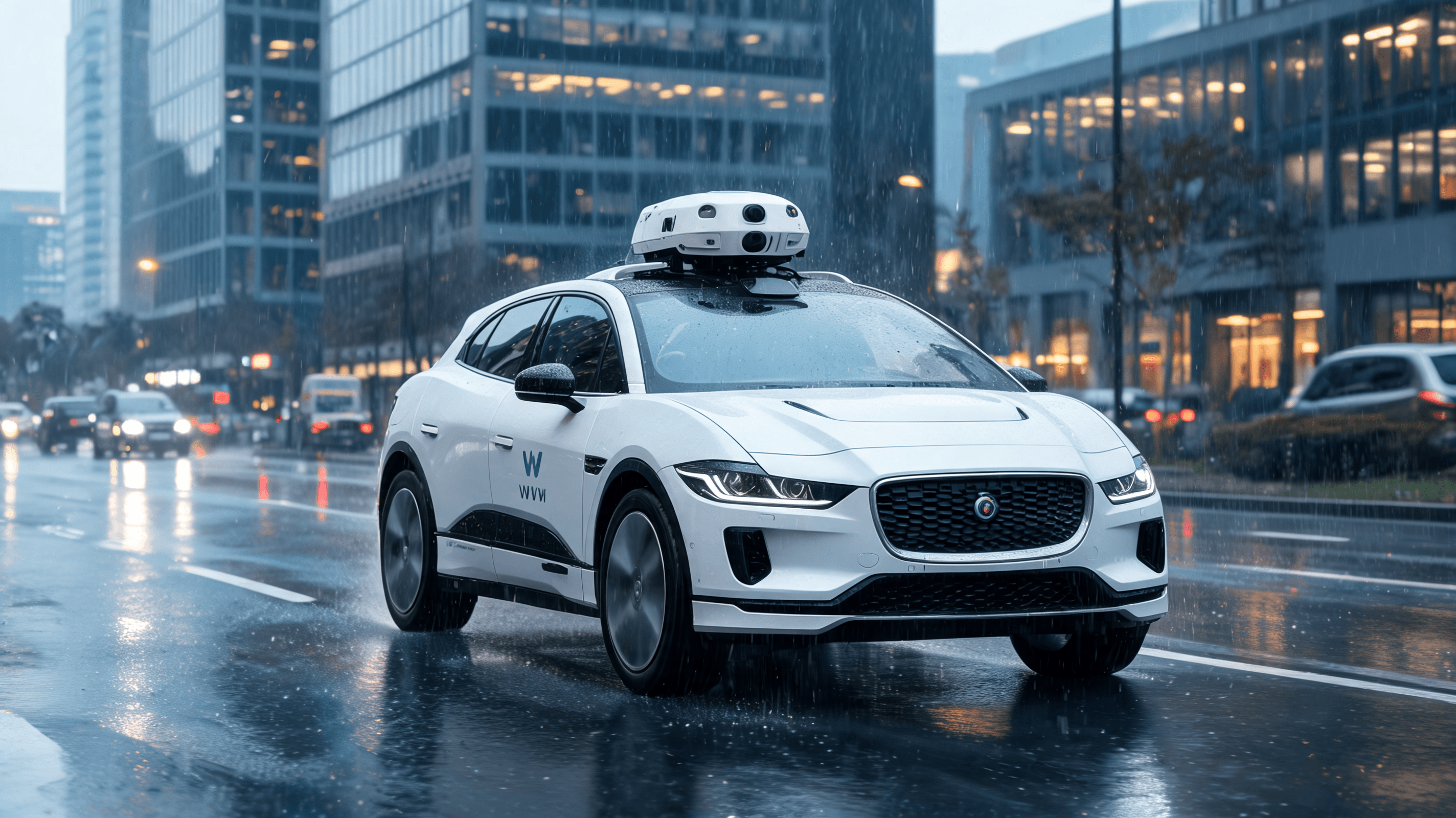
Major Service Adjustment: Waymo Pauses Robotaxi Freeway Operations
Waymo, a leader in autonomous driving technology, has been forced to take significant action by pausing its robotaxi services on freeways across several U.S. cities. The decision follows a series of recent safety incidents, particularly concerning the performance of vehicles when navigating extreme weather and flooded road conditions, which have drawn sharp attention from both regulators and the public.
According to reports from major news outlets like the BBC, Waymo emphasized that this adjustment was made out of an "abundance of caution" with the intent to further enhance the reliability of its autonomous driving systems in complex scenarios. While services continue to operate on local roads, the suspension of freeway operations means that efficiency for longer-distance trips will be directly impacted.
Regulatory Red Lines and Safety Thresholds
Operating autonomous vehicles is essentially a balancing act between state-level licensing (such as permits from Departments of Motor Vehicles) and federal safety guidelines issued by agencies like the National Highway Traffic Safety Administration (NHTSA). This incident underscores that the ability of AV systems to handle sudden extreme weather remains a significant hurdle on the road to full-scale commercialization.
Under federal regulations, any incident involving safety failures triggers mandatory reporting requirements. Regulators have the authority to compel operators to suspend services and undergo extensive system audits following such events. For Waymo, the challenge lies in proving that its algorithms can effectively manage "edge cases”—rare but dangerous scenarios—which is essential to regaining regulatory approval.
Technical Limitations and the Test of Public Trust
The autonomous driving industry is currently transitioning from "demonstration deployments" to "commercial expansion." Waymo has long been viewed as the technical standard-bearer in the industry, yet this voluntary pause highlights the limitations of machine learning models in unstructured environments, such as flooded roads or obscured road markings.
This is not merely a technical challenge; it is a test of public trust. When self-driving vehicles exhibit erratic behavior on highways, it undermines social confidence in the technology, even in the absence of severe casualties. Waymo must now dedicate resources to adjusting its perception algorithms and conducting large-scale simulation testing to rectify these safety gaps.
Future Outlook and Industry Implications
As the autonomous vehicle sector matures, such "pauses and adjustments" may become more common. Regulators are raising the bar for entry, no longer satisfied with performance metrics limited to fair-weather, dry-road operation.
In the coming months, we should closely monitor Waymo’s progress regarding software updates and the restoration of its operational permits. Should the suspension persist for an extended period, it could impact Waymo's market share in competitive regions and revenue growth targets, potentially leading investors to re-evaluate the return on investment (ROI) timelines for the industry at large.