

A New Chapter in Aerospace Engineering Automation
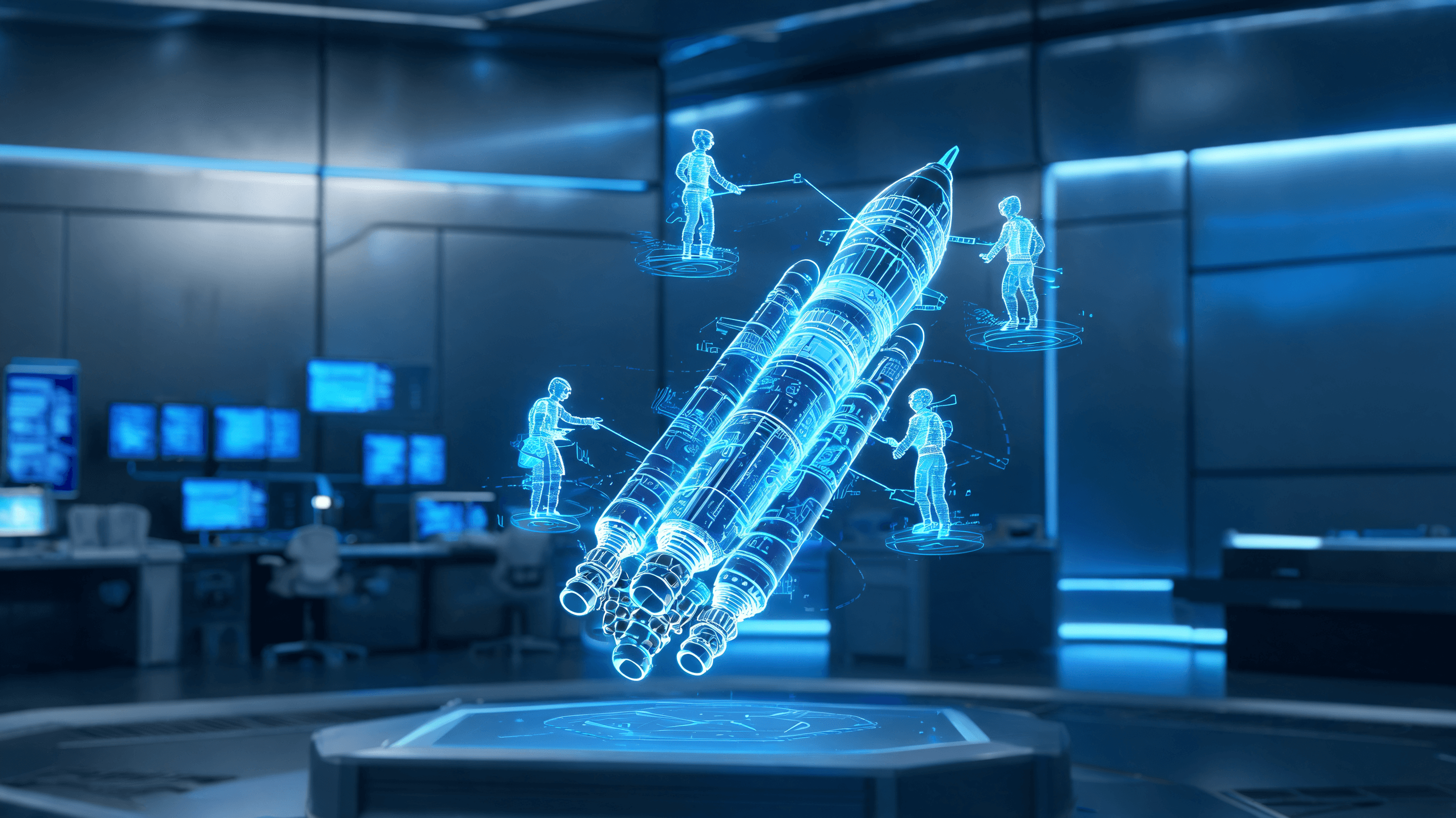
In the aerospace and defense sectors, rocket design and manufacturing have historically been highly complex, time-consuming processes that depend heavily on expert human experience. However, the rise of agentic AI technology is reshaping this traditional industry. A recent research paper (arXiv:2606.00097) introduces 'RocketSmith,' a system designed to enable intelligent automation of the design, manufacturing, and optimization processes for high-powered rockets.
RocketSmith is not just design software; it is an ecosystem that integrates multiple subagents and specialized skills. It autonomously invokes various software tools to validate flight stability, thermal loading, and structural integrity. More importantly, it generates parametric design components for rocket assembly. This approach disrupts the traditional 'design-simulate-fix' cycle, increasing the speed of design iterations by an order of magnitude.
From Parameter Optimization to Parametric Manufacturing
Traditional parameter identification often requires senior engineers to spend weeks debugging models to ensure optimal performance within hardware safety constraints. RocketSmith automates these heavy computational tasks through its agentic structure. This process includes not only iterative optimization of flight parameters but also the direct conversion from design models to CAD files, ensuring seamless alignment between the manufacturing process and design specifications.
In academia, research emphasizes the potential of AI in the design of complex industrial systems. For example, a report published in PMC (PMC12936183) discusses how LLM-driven workflows enhance the conceptual design process. It highlights how multi-agent collaboration—facilitated by LLMs for problem refinement, information gathering, and scheme evaluation—can significantly improve the coverage and novelty of engineering designs.
Industry Impact and Future Outlook
Although systems like RocketSmith are currently in early development and require more peer-reviewed validation to ensure engineering reliability in extreme environments, they undeniably signal a trend: high-end hardware engineering is shifting from 'digital tools' to 'intelligent partners.'
Such systems have already seen small-scale testing in California's aerospace manufacturing sector. The efficiency gains are clear, making these technologies particularly attractive for commercial aerospace startups that require rapid experimental iteration. As AI agent systems mature in areas such as parameter identification and structural topology optimization, we expect to see lighter, more efficient, and faster-to-develop rocket products in the coming years.
For engineers, AI will not replace creative decision-making; rather, it will free them from repetitive numerical optimization, allowing them to focus on core system architecture and risk management. As this technology becomes widespread, the barrier to entry for rocket design will drop, which is a major positive for the rapid growth of the global commercial space industry.